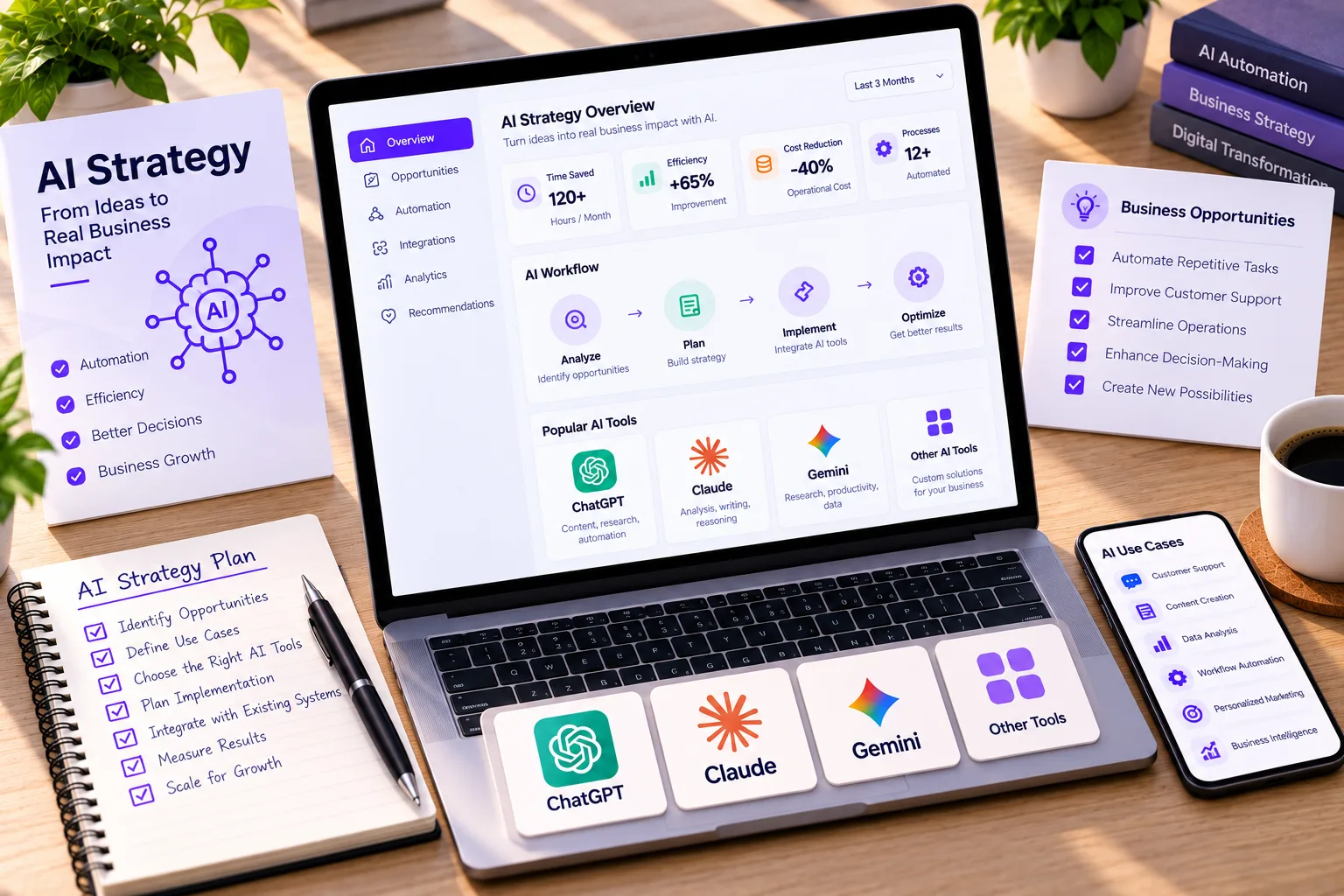
Automate Repetitive Tasks and Streamline Your Workflows
We help businesses automate repetitive tasks and streamline internal processes to reduce manual work, improve accuracy, and increase operational efficiency. A well-designed automation system ensures your workflows run smoothly without constant manual intervention.
- Improves speed and consistency of processes
- Eliminates repetitive manual tasks
- Connects tools and systems seamlessly
- Frees up time for high-value work
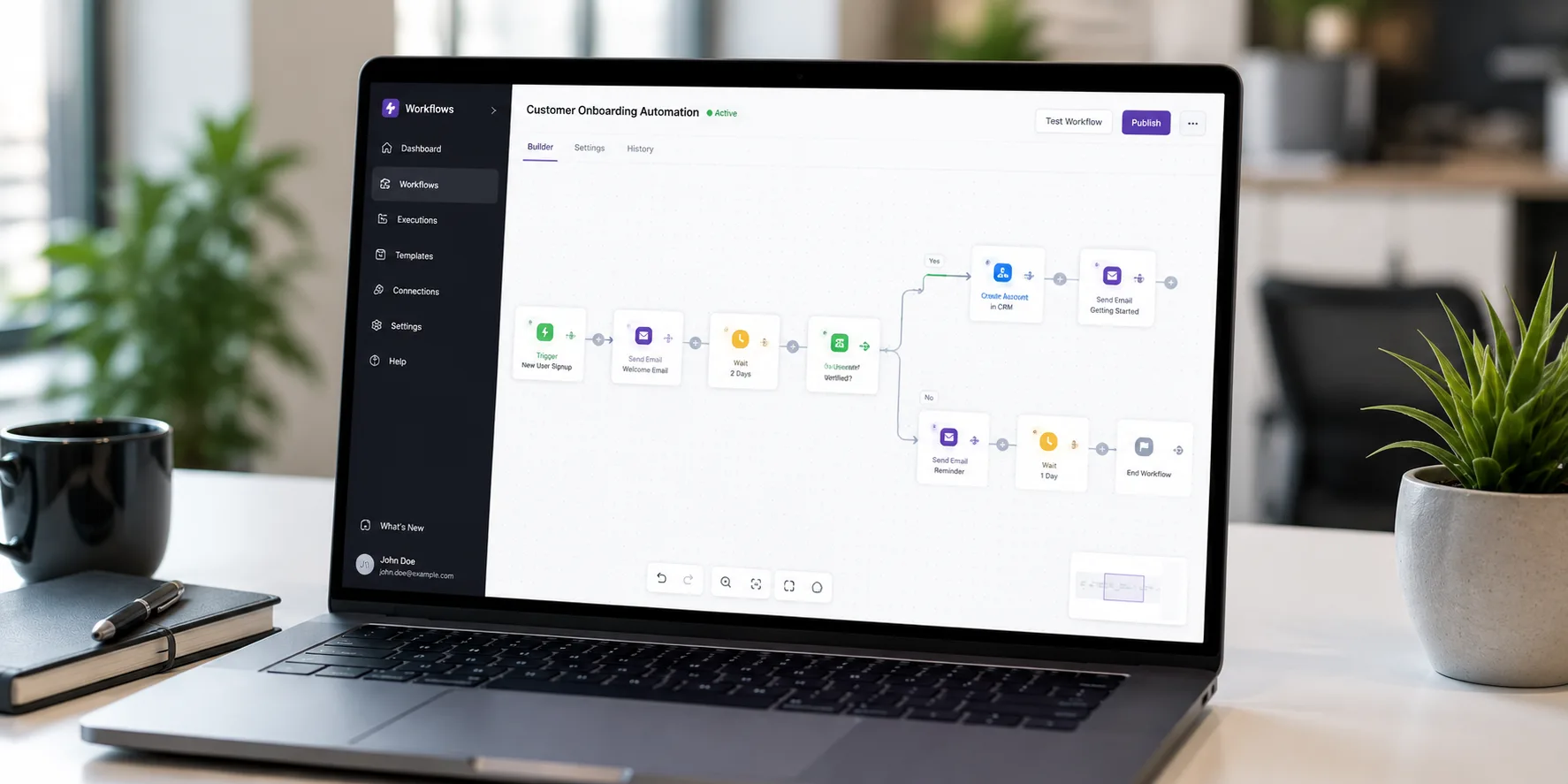
Key Highlights of Our Workflow Automation Solutions
Our approach focuses on practical automation that fits into your existing processes—not forcing you to change how your business works.
- Process-driven automation design
- Seamless tool and system integration
- Real-time triggers and notifications
- Reliable and maintainable systems
Solutions We Provide
We design and implement automation systems tailored to your daily operations and business workflows.
Task & Process Automation
We automate repetitive tasks such as data entry, follow-ups, internal operations, and routine workflows.
CRM & Tool Integration
We connect your CRM, apps, and platforms to ensure smooth data flow without manual effort.
Notification & Trigger Systems
We build systems that automatically trigger actions, alerts, and updates based on events and conditions.
Workflow Optimization
We analyze and restructure your processes to make automation more effective and efficient.
Custom Automation Systems
We develop tailored automation solutions based on your business logic and requirements.
API & System Connectivity
We integrate multiple systems using APIs to create unified and automated workflows.
Why Businesses Choose Us
Focused on building automation that actually works in day-to-day operations.
Built Around Your Existing Workflow
We adapt automation to your current processes instead of forcing you into new systems or tools.
Practical Automation, Not Over-Engineering
We focus on solving real problems with simple, reliable logic instead of creating complex systems that are hard to manage.
Clear Trigger-Based Systems
Every automation is built with defined triggers and actions, so you always know how and why something happens.
Reliable Data Flow Between Tools
We ensure your systems communicate properly, reducing manual data transfer and inconsistencies.
Focused on Time & Cost Savings
Automation is designed to reduce workload and improve efficiency where it matters most.
Flexible and Easy to Scale
Workflows can be expanded and modified as your business grows or processes change.
Tools & Technologies
Industries We Serve
We work with businesses across multiple industries, delivering solutions tailored to specific operational needs.
How We Work
A practical approach to designing and implementing workflow automation systems.
Process Understanding
We study your current workflows to understand how tasks are handled and where inefficiencies exist.
- Workflow analysis
- Task breakdown
- Bottleneck identification
Automation Planning
We identify which processes should be automated and define how the system will work.
- Automation mapping
- Trigger and action definition
- Tool selection
System Design
We design how different tools and processes will connect and interact.
- Workflow architecture
- Data flow planning
- Integration structure
Development & Integration
We build and connect automation systems with your tools and platforms.
- Automation setup
- API integration
- System configuration
Testing & Validation
We test automation flows in real scenarios to ensure accuracy and reliability.
- Workflow testing
- Error handling
- Performance checks
Deployment & Improvement
We launch automation systems and continuously improve them based on usage.
- Deployment
- Monitoring
- Ongoing optimization
Frequently Asked Questions
What is workflow automation and how does it work?
Workflow automation connects your tools, systems, and processes so tasks are executed automatically based on defined triggers and conditions. For example, when a lead fills a form, the system can automatically store data, notify your team, and assign follow-ups without manual input.
What types of business processes can be automated?
Common processes include data entry, lead management, customer follow-ups, reporting, notifications, internal approvals, and syncing data between multiple tools. Any repetitive or rule-based task is a good candidate for automation.
How do you decide which processes should be automated first?
We prioritize processes that are repetitive, time-consuming, and prone to human error. We also consider impact—focusing on areas where automation can save time, reduce cost, or improve workflow efficiency quickly.
Will workflow automation require changes to my current systems?
In most cases, no major changes are required. We design automation around your existing tools and workflows. If improvements are needed, we recommend minimal adjustments for better efficiency.
Can automation integrate with the tools I already use?
Yes, automation can connect with CRMs, websites, APIs, spreadsheets, communication tools, and third-party platforms to ensure smooth and continuous data flow.
What is the cost of workflow automation solutions?
Costs vary based on the number of workflows, integrations, and customization required. Our solutions are designed to provide long-term efficiency and return on investment.
Is workflow automation suitable for small businesses?
Yes, small businesses benefit greatly by reducing manual workload, improving efficiency, and scaling operations without increasing team size.
How long does it take to implement workflow automation?
The timeline depends on the complexity of workflows and integrations, but we always define clear phases and deliverables before starting.
How long does it take to implement workflow automation?
The timeline depends on the complexity of workflows and integrations, but we always define clear phases and deliverables before starting.