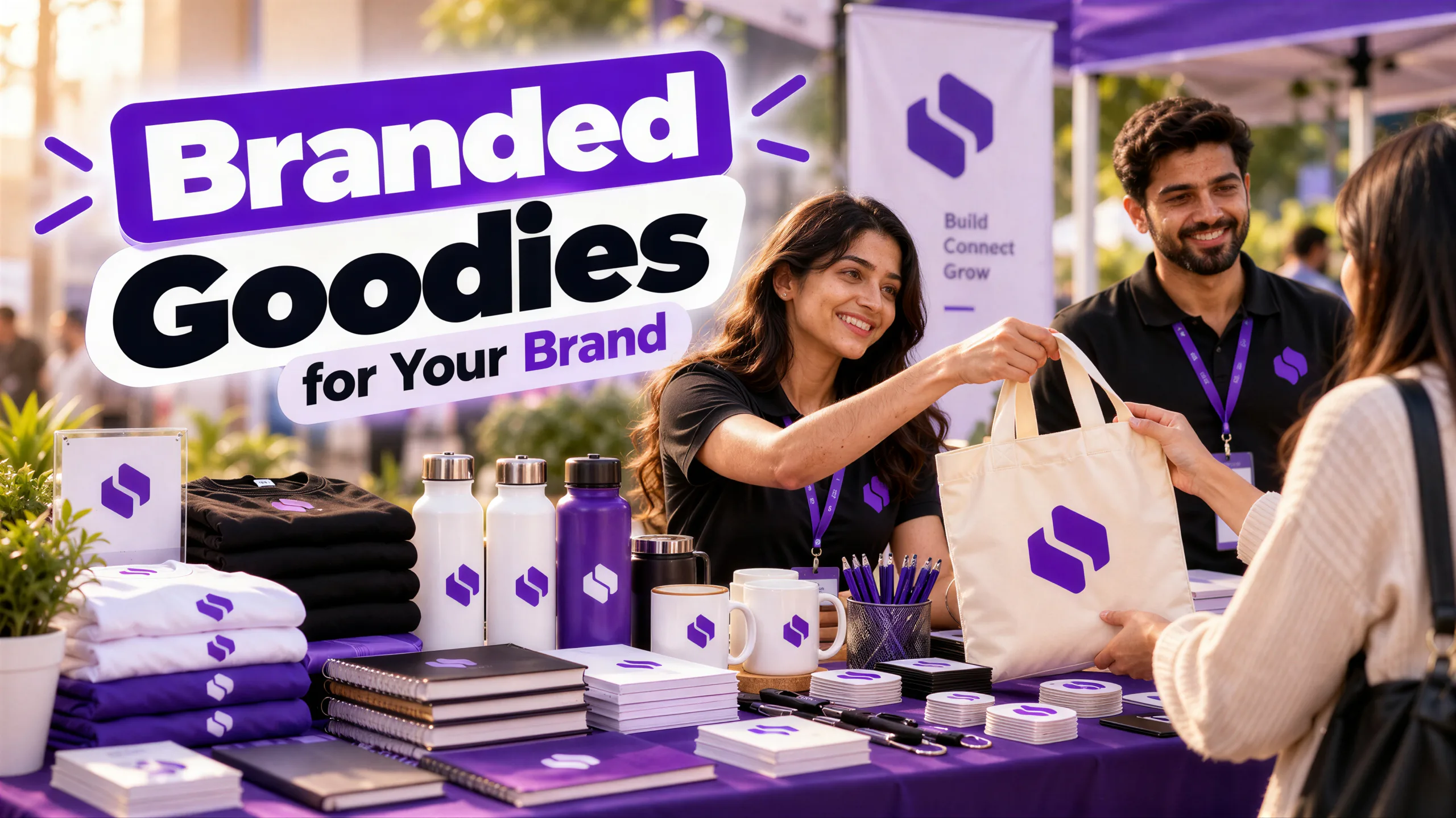
In a world saturated with digital advertisements, physical brand touchpoints offer a rare opportunity to make a tangible connection. A branded T-shirt, tote bag, coffee mug, notebook, sticker, or bottle may look like a small marketing item. But when someone receives it, they are experiencing your brand in a physical form.
When you hand someone a piece of merchandise at an expo, a campus hackathon, or through an online store, you are handing them a physical representation of your brand’s values.
Would someone actually want to keep and use this?
A giveaway made from poor-quality material can quickly become disposable. A thoughtfully designed product, on the other hand, can stay on someone’s desk, travel with them, appear in photos, or become something they genuinely enjoy using.
The difference often comes down to more than the logo. Material, quality, usefulness, design, packaging, and presentation all contribute to how people perceive your brand.
Your Merchandise Is Part of Your Brand Identity
Brand identity is usually associated with logos, colors, typography, websites, packaging, and social media. But your physical merchandise can communicate those same brand values.
A premium company may choose heavyweight fabric, refined packaging, metal accessories, or carefully finished products. An everyday consumer brand might prioritize affordable, practical products that people can use regularly. An environmentally conscious business may focus on recycled, reusable, biodegradable, or responsibly sourced materials.
The product itself becomes another touchpoint between the brand and its audience.
Instead of asking:
“What can we put our logo on?”
Ask:
“What would make our audience want to use, keep, or share something from our brand?”
Start With Your Brand Positioning
There is no single “best” material for every business.
The right choice depends on what you want people to associate with your brand.
Premium Brands
If your brand is positioned as premium, inexpensive materials can create a disconnect.
Consider details such as:
- Higher-quality fabrics
- Better printing or embroidery
- Durable materials
- Refined packaging
- Minimal and sophisticated branding
- Quality notebooks, bags, bottles, or accessories
The goal isn’t simply to make something expensive. It is to make the product feel intentional and worth keeping.
Everyday & Community-Focused Brands
For brands that want to feel approachable and useful, practicality can matter more than luxury.
Think about products people naturally use:
- Tote bags
- T-shirts
- Mugs
- Notebooks
- Water bottles
- Stickers
- Caps
- Laptop accessories
If the product becomes part of someone’s daily routine, your brand can receive repeated exposure without feeling like an advertisement.
Eco-Conscious Brands
For sustainability-focused brands, material choice becomes even more important.
Reusable bags, recycled materials, refillable products, responsibly sourced paper, and durable products can communicate environmental values more effectively than simply printing “eco-friendly” on a product.
But sustainability should be genuine.
Don’t choose an environmentally questionable product just because it has an eco-friendly message printed on it.
Goodies Should Be Useful, Not Just Branded
One of the biggest mistakes businesses make is choosing merchandise based entirely on cost.
A cheap giveaway may save money initially, but if nobody uses it, its marketing value can be very low.
Before ordering hundreds of products, ask:
Would I use this if the logo wasn’t there?
If the answer is no, reconsider the product.
A useful tote bag can go to the grocery store. A good bottle can go to work or the gym. A quality notebook can stay on someone’s desk. A well-designed T-shirt can become part of someone’s wardrobe.
The more naturally the product fits into someone’s life, the more opportunities your brand has to be seen.
Build a Merchandise System, Not Random Products
A common mistake is ordering different products from different suppliers and putting the logo on everything.
The result can look inconsistent.
Instead, treat merchandise like an extension of your visual identity.
Define things such as:
- Logo placement
- Color combinations
- Typography
- Illustration style
- Photography or graphic style
- Packaging
- Product tags
- Patterns
- Iconography
- Print and embroidery treatments
This creates recognition even when the logo isn’t the main element.
Someone should ideally be able to see the product and recognize the brand from its overall design language.
Think Beyond T-Shirts and Mugs
Traditional merchandise still works, but brands now have many more opportunities.
A simple tote bag can become a reusable everyday item. A utility or striped market-style bag can become a recognizable fashion or lifestyle product. A sticker pack can travel between laptops, notebooks, bottles, and phone cases.
The important question isn’t:
“What products can we brand?”
It’s:
“What products make sense for our audience?”
A university community may respond differently from a technology company’s customers. A design studio’s merchandise may look completely different from a financial company’s. A sports community may want completely different products from a professional services firm.
Audience first. Product second. Branding third.
Common Merchandise Mistakes to Avoid
Choosing the Cheapest Material
Lower cost isn’t always lower risk. If the product feels poor quality, people may associate that experience with your brand.
Putting the Logo Everywhere
More branding doesn’t necessarily mean better branding.
Sometimes a small, well-positioned logo looks more premium and memorable than a large logo covering the entire product.
Ignoring Comfort and Function
A T-shirt that doesn’t feel good won’t be worn. A bag that isn’t practical won’t be carried. A bottle that leaks won’t be used.
Design around the user’s experience.
Ordering Too Much Too Early
Before placing a large order, test a small batch.
Get feedback on:
- Quality
- Size
- Comfort
- Material
- Design
- Packaging
- Practicality
Then scale what works.
Treating Sustainability as a Marketing Sticker
If sustainability is part of your positioning, consider the complete product lifecycle rather than simply adding an environmental message to the packaging.
Forgetting the Brand Guidelines
Different products shouldn’t feel like they came from completely different companies.
Your merchandise should follow the same visual principles as your website, packaging, social media, and other brand communications.
Create Experiences, Not Just Promotional Items
The most successful branded merchandise doesn’t feel like advertising.
It feels like something people want to own.
That could mean a beautifully designed notebook at a conference, a comfortable T-shirt for a campus community, a reusable bag given to customers, or a limited-edition product available through your brand’s online store.
The material matters. The design matters. The usefulness matters. The packaging matters.
Frequently Asked Questions
How do I choose the right material for branded Goodies?
Choose materials based on your brand positioning, audience, budget, and how you expect the product to be used. Premium brands may benefit from higher-quality finishes, while everyday or eco-focused brands can prioritize practical, durable, and sustainable materials.
What are the best products for company Goodies?
Popular options include T-shirts, tote bags, bottles, mugs, notebooks, stickers, caps, laptop accessories, and reusable bags. The best choice is the product your audience is most likely to use regularly.
Is it better to give branded products away or sell them?
Both approaches can work. Goodies are useful for events, campaigns, communities, and customer appreciation, while selling merchandise can turn your brand products into an additional revenue stream and strengthen customer or community loyalty.
What should I consider when choosing eco-friendly promotional products?
Look beyond the label. Consider the material, durability, reusability, packaging, production process, and how long the product is likely to be used. A durable reusable product can sometimes create more value than a disposable promotional item.
Can merchandise be part of my overall brand identity?
Absolutely. Merchandise should ideally follow the same visual identity as your website, packaging, social media, marketing materials, and other brand touchpoints. This creates a more consistent and recognizable brand experience.